A Year in the Making
Denver didn't arrive at MagicSchool by accident. The district spent a year developing its approach to AI in K-12, running a structured pilot across multiple platforms and issuing a formal RFP, with teacher, student, and community feedback shaping the final decision.
What tipped the scales, according to the MagicSchool team, was a combination of data privacy and security practices, pedagogical alignment, and the people supporting the product day to day. The rollout itself followed a train-the-trainer model, anchored to the district's own strategic goals and built around custom tools, such as IEP support for special education, tailored sessions for communications staff, differentiated experiences by grade band, all mapped to Denver's existing AI guidance and its red/yellow/green framework for judging when AI use is appropriate.
That framework gave teachers, students, and families a shared vocabulary for AI use, turning implementation into what the MagicSchool team calls "a meaningful instructional practice" rather than a policy handed down from above.
Designing for the Moment of Use
One detail stands out in how MagicSchool approaches student privacy: it doesn't rely only on policy to keep student data out of its tools. It builds friction directly into the product.
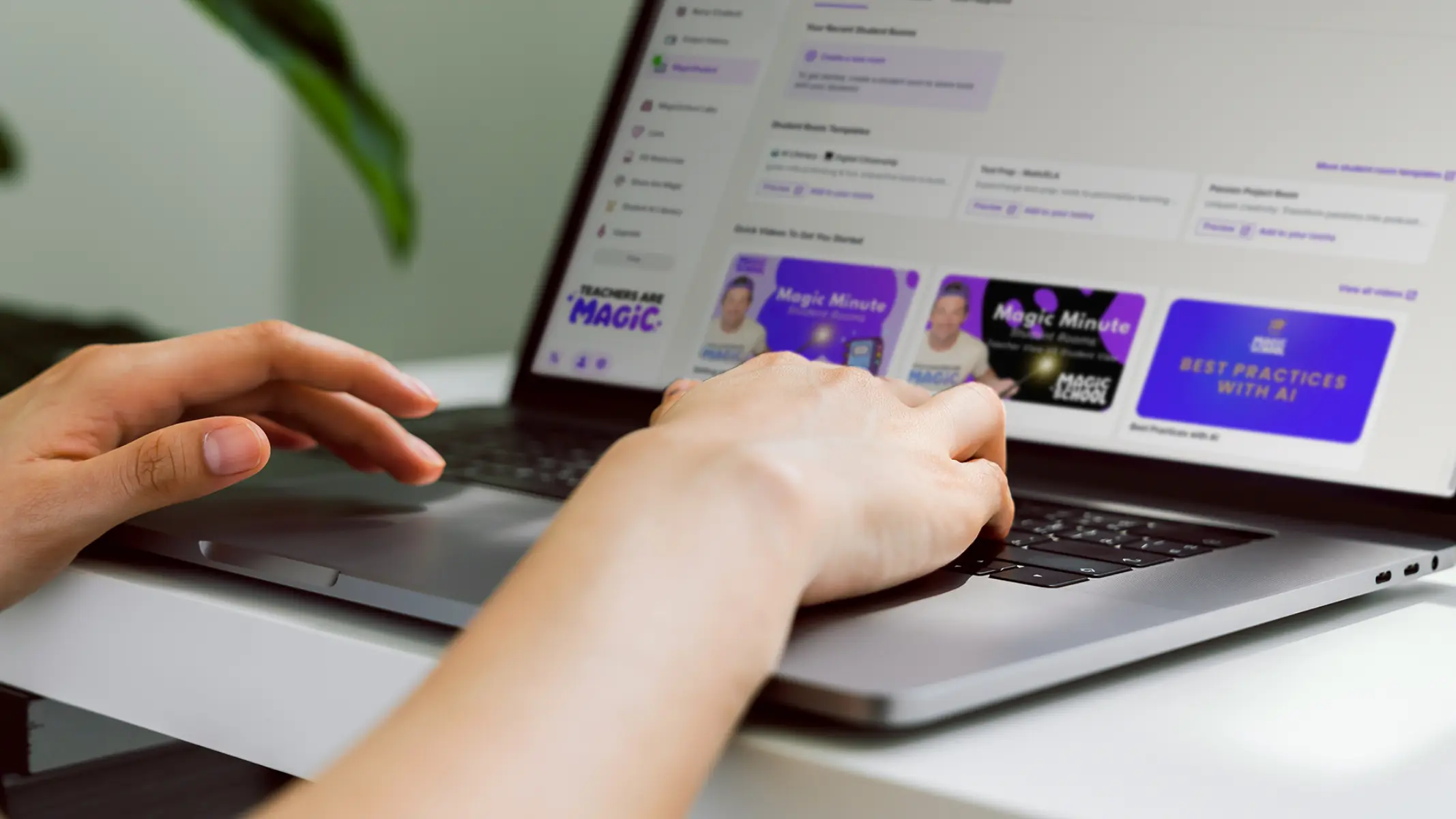
Open a tool built for drafting an IEP or a parent email, and before a teacher types a word, they see a reminder not to include student names or identifying details placed exactly where the cursor lands.
"The safest student data is the data that never gets entered," said Adeel Khan, CEO of MagicSchool. "Teachers are busy and will default to whatever is easiest, so we put the reminder right where their cursor lands." A former teacher and principal himself, Khan points to a simple design principle behind the choice: a nudge at the moment of use works better than a rule buried in a long policy document.
Rather than treating that friction as an inconvenience, teachers have responded to it as a signal of intent. "They already know they're responsible for student data, and they appreciate a tool that helps them get it right instead of leaving it entirely on them to remember," Khan said. "It builds trust."
Independent Validation, Not a Vendor's Word
Design choices are one piece of the trust equation. The other is being willing to have those choices checked by someone outside the company.
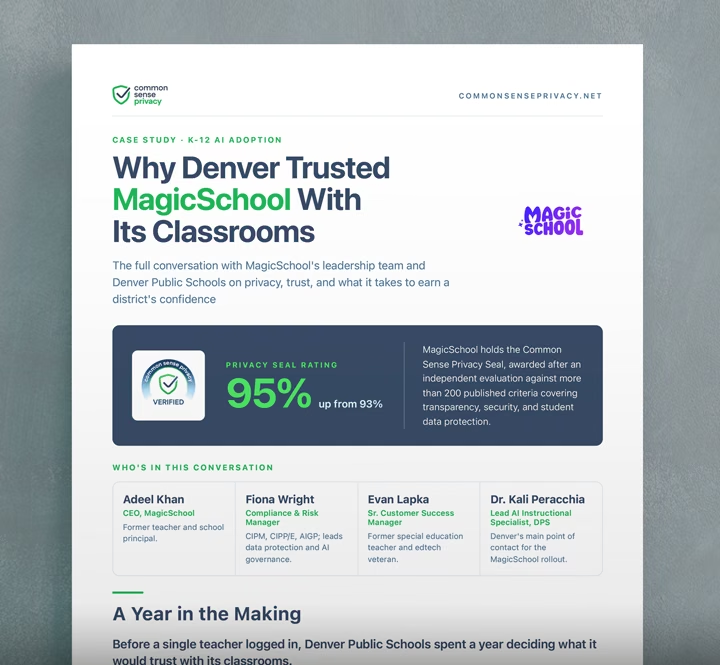
MagicSchool holds the Common Sense Privacy Seal, awarded after an evaluation against more than 200 criteria spanning transparency, security, student data protections, and responsible data use — how a company collects, uses, shares, protects, and retains data, and how it handles data rights, parental consent, and advertising and tracking.
For Fiona Wright, MagicSchool's Compliance & Risk Manager, the value of the process was as much about clarity as it was about validation. "Many of the underlying protections were already part of how MagicSchool operated, but the review helped us identify areas where we could be even clearer about them," she said. The company used the evaluation to strengthen its external-facing Student Data Policy, adding detail on data retention and deletion practices and on responsible, age-appropriate AI design.
Khan puts the change more plainly: "Privacy that only lives inside the engineering team isn't enough. Districts and families need to be able to see it."
MagicSchool's rating moved from 93% to 95% between evaluations, a detail Wright frames as evidence of an ongoing practice rather than a one-time exercise. "We view privacy as an ongoing practice rather than a one-time compliance exercise," she said.
For districts doing their own due diligence, that kind of independent reference point changes the shape of the conversation. "A district technology lead shouldn't have to take a vendor's word for anything," Khan said. "The Seal lets us point to an independent review instead of our own claims, and that moves the conversation from 'convince me' to 'show me the details.'"
Built for the Classroom, Not Adapted for It
So why would a district that's cautious about AI draw such a clear line between two tools? MagicSchool's team points to design intent.
"MagicSchool was built for classrooms from day one, by educators, with the assumption that teachers and students would be using it and that districts would need control and visibility," Khan said. "A general-purpose tool is built for everyone, which means schools end up managing the gaps themselves."
That distinction shaped how MagicSchool approached the Denver relationship, not as a sale, but as a partnership. "The CSP rating gave us credibility and a seat at the table when discussing data governance, privacy, and data security with DPS," said Evan Lapka, MagicSchool's Senior Customer Success Manager. "It empowered us to be more than a vendor, taking a more consultative approach to implementing with the district."
Dr. Kali Peracchia, Lead AI Instructional Specialist for Denver Public Schools, describes the effect from inside the district. A side-by-side graphic comparing MagicSchool's privacy rating to ChatGPT's, with the reasoning behind the gap, has become a go-to resource for explaining the district's choice to families and school leaders. "We needed to speak confidently to our community about how we're integrating AI into teaching and learning in a way that protects our district data and maintains well-being and safety of our students and staff," she said, "while also educating our community on why the alternatives are not as safe."
What Changes for Teachers and Students
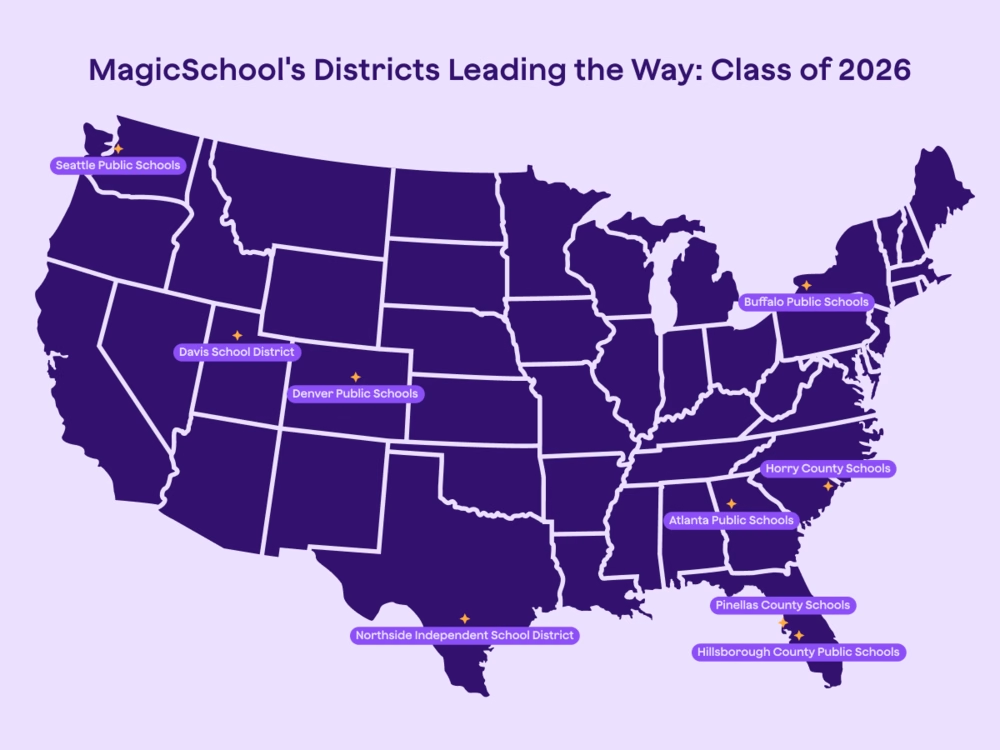
A year into the partnership, the clearest signal isn't a satisfaction score, it's what teachers and students are doing differently. Teachers describe real time savings and more capacity to be present with students, as prep and administrative work shifts elsewhere. Students are building AI literacy through tools that reflect the district's own equity commitments, guided by the shared vocabulary of the red/yellow/green framework. And MagicSchool has since expanded well beyond Denver, a scale-up that Khan says didn't require changing the fundamentals, only deepening the review behind them.
What’s Next for Magic School and Privacy
For MagicSchool, the work doesn't end at a passing score. "Privacy-by-design has to scale with us," Wright said. "That means thinking about privacy, safety, and responsible AI from the beginning when we develop new features, not treating them as checks that happen only at the end."
Khan frames the Seal the same way: not a finish line, but a standard the company has to keep earning. "A 95% rating is a public commitment we have to keep earning as the product and the regulatory landscape change, and we plan to keep going back through that evaluation."
Perhaps Peracchia sums up the relationship best: "Our partnership with MagicSchool can best be described as thoughtful, exciting, and responsible, approaching educators with trust and care before scale and sale."